White Plains Daily News Service Since 2000 A.D. "24th YEAR DAILY COVERAGE OF WHITE PLAINS NY USA. John F. Bailey, Editor (914) 997-1607 wpcnr@aol.com Cell: 914-673-4054. (WE ALWAYS CALL YOU BACK.) News Politics Personalities Neighborhoods Schools Finance Real Estate Commentary Reviews Policy Correspondence Poetry Philosophy Photojournalism Arts. The WHITE PLAINS CITIZENETREPORTER. TELEVISION: "White Plains Week" News Roundup, 7:30 EDT FRI, 7 EDT MON & the incisive "People to Be Heard" Interview Program 8PM EDT THURS, 7 PM EDT SAT on FIOS CH 45 THROUGHOUT WESTCHESTER AND, ALTICE OPTIMUM WHITE PLAINS CH 76 "Fighting for Truth, Justice and the American Way." EXTRA! EXTRA! READ ALL ABOUT IT! CHOICE OF WHITE PLAINS, WESTCHESTER AND THE WORLD FOR 23 YEARS. AND YOU CAN READ THE TYPE! ADVERTISE WHERE THE EYES AND THINKERS ARE FROM ALL OVER THE WORLD! IN MARCH TOP 10 VISITOR COUNTRIESl 1. USA 8,327 2. CHINA 3,590 3.IRELAND 1,018 4 GERMANY 933 5 RUSSIA 426 6 ISRAEL 366 7. CANADA 268 8 FRANCE 243 9 UNITED KINGDOM 240 10. NORWAY 216 (RATINGS SOURCE WORDPRESS ROBOT FREE)) THE NEWS YOU NEED TO KNOW THAT THEY DON'T TELL YOU! LOOK FOR THE FEDORA!
GEORGE LATIMER AND THE DoIT TEAM RESTORE COUNTY TECHNOLOGY IN 9 HOURS AFTER GREATEST NETWORK TECH OUTAGE THAT AFFECTED MILLIONS OF COMPUTERS
THE COUNTY EMPLOYEES WHO RECONNECTED THE COUNT TECH SERVICES CUT BY THE WORLD WIDE FAILURE– WHAT A JOB! THEY WERE READY. KNEW WHAT TO DO. HAD PLAN AND RE-RIGGED IN 9 HOURS. CONGRATULATIONS TO THE DoIT PROFESSIONALS…YOUR PROFESSIONALS!
YOUR ATTENTION PLEASE LADIES AND GENTLEMEN NOW RUNNING FOR PRESIDENT FOR THE DEMOCRATS: KAMALA HARRIS, NOW RUNNING FOR BIDEN, HARRIS NUMBER TWO
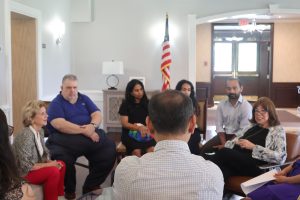
COUNCILWOMAN FOR 10 YEARS, NADINE HUNT-ROBINSON,THE PEOPLE’S ADVOCATE
ANNOUNCES HER POLITICAL FUTURE. STARTS LISTENING TOUR
HOUSING PRICES INFLATE TO RECORD LEVELS AND RISING AS
100% OF OWNERS SELLING HOMES IN JUNE GOT THEIR ORIGINAL LISTING PRICE
NUMBER OF HOMES ON MARKET IN COUNTY IN JUNE JUST 947 DOWN 17%
BANKS SQUEEZING THE BUYER HOPING TO BUY THEIR FIRST HOME
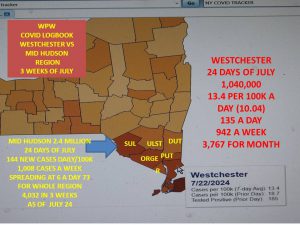
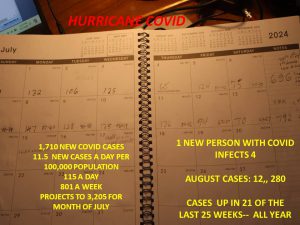
COVID INFECTIONS HIGH AFTER 3 WEEKS IN JULY WESTCHESTER RECORDS 2,313 NEW COVID CASES IN 3 WEEKS
MID HUDSON REGION ALL 7 COUNTIES SHOW HOSPITALIZATIONS FOR COVID UP 57%
MID HUDSON REGION REPORTS 4,032 CASES OF COVID IN 3 WEEKS OF JULY AND
WESTCHESTER IS RESPONSIBLE FOR 2,313 OF THOSE CASED.
COVID HAS INCREASED IN 22 OF THE 26 WEEKS OF THIS YEAR. BEEN GROWING FOR HALF THE YEAR
JOHN BAILEY REMEMBERS THE MOON LANDING 55 YEARS AGO THIS WEEK
THE NEWS YOU NEED TO KNOW WITH JOHN BAILEY AND THE NEWS
DR. RICCA PREVIEWS THE NEW SCHOOL YEAR AND WRAPS UP THE OLD. WHAT’S AHEAD? STATUS OF THE SCHOOL FIELDS; STATUS OF CONSTRUCTION AHEAD; HOW THE NEW TECHNICAL VOCATIONAL PROGRAM WILL START THIS FALL; AND MORE.
See his report anytime on www.wpcommunitymedia.org
ALL 504 HOMEOWNERS GOT THEIR ORIGINAL LISTING PRICE IN JUNE!
CLOSED SINGLE FAMILY HOME SALES DECLINED IN ALL COUNTIES IN REGION.
WESTCHESTER SINGLE FAMILY HOME SALES DOWN 13.3% .
SALES PRICES CONTINUE GETTING HIGHER AND HIGHER AS HOMES NEWLY LISTED BY OWNERS CONTINUE TO DECLINE
MORTGAGE RATES DECLINING BY FALL
WPCNR REALTY REALITY.From Hudson Gateway Association of Realtors (Edited). July 23. 2024:
Sales of single-family homes in Westchester County in June declined by 13.3%, and the median sales price shot up by 12.7% to a new high of $1,031,500. In June 2023, the median price for a single-family home stood at $915,000. In May 2024, the median price reached the previous all-time record of $980,000.
The Westchester condo market also experienced a drop in sales in June at 7.7%, and a 3.3% hike in the median sales price of condos to $511,000. Closed sales declined by 13.0% in the co-op market, however the median sales price grew by 15% to $215,000.
New listings declined for all housing types—condos by 27.4% co-ops by 3.4% and 3.1% fewer single-family home listings. Overall inventory for all property types declined, with co-ops seeing the largest decrease at 27.4%, followed by condos at 18.9% and single-family homes at 17.1%. Months of supply was down 10.3%to just 2.6 months, and pending sales dropped 9.4%.
Sales were down in all counties in the Hudson Gateway Association of Realtors market area, with Orange County posting the largest decline in single-family home sales at 26.9%, followed by Putnam and Sullivan counties, which posted the same 16.9% fall-off in sales activity.
Closed sales in the condo markets were down or flat for every market with the exception of the Bronx, which enjoyed a 14.3% increase in sales last month.
However, theBronx median condo price, after growing 42% in May, fell 18.7% in June to $333,250. Westchester’s condo and co-op median prices increased by about 3.3% and 15%, respectively to $511,000 and $215,000. In Rockland County, the median condo price rose 5.8% to $399,000 and the co-op median rose 5.0% to $126,000.
Inventory of single-family homes plummeted in all areas except Sullivan County, which experienced a 7.2% increase. Putnam County posted the highest for overall pending sales for all property types with a 19.5% increase in June. The only other county to post positive overall pending sales was Sullivan at 2.5%.
Today’s report by the Hudson Gateway Association of Realtors (HGAR), based on data supplied by OneKey® MLS, offers mixed results for the home sales market, which continues to deal with high mortgage rates, low inventory, and strong demand.
Those three market forces are causing prices to continue to rise throughout the region. As the month ended, a number of positive economic reports clearly showed inflation is cooling and analysts are now expecting the Federal Reserve to begin cutting rates by as early as its sessions in September.
The 30-year fixed-rate mortgage averaged 6.92% in June, according to Freddie Mac and ended the month at 6.86%.
“Limited supply and strong demand continue to be the driving forces in our markets right now, particularly for single-family homes,” said HGAR CEO Lynda Fernandez. “We expect lower interest rates and higher levels of inventory to help stabilize pricing and to generate more home sales in future months.”
This column originally appeared on WPCNR on February 1, 2003, and celebrates the Dreamers, the Achievers, the High and the Mighty– THE AMERICANS WHO HAD THE RIGHT STUFF:
THE SPACE BLAZERS
The Apollo 11 Crew: Neil Armstrong, Michael Collins, Buzz Aldrin, Jr. Mr. Armstrong set foot on the moon 53 years ago on July 20, 1969 (NASA Photo)
The papers and “news sites” I receive and monitor at WPCNR White Plains News Headquarters, White Plains, New York, USA did not tell me ALL week this week was the 55th anniversary of the week when Neil Armstrong walked on the moon. Sadly the greatest American achievement next to winning World War II has been forgotten.
The exact hour was 20:11 GMT (Greenwich Mean Time). That was the culmination of the last great American achievement – the personal computer, the cellphone and the internet, social media were to come — after the amazing American achievement conquering space in 9 years — when Apollo 11 with Armstrong in command, with astronauts Michael Collins and Edwin E. Aldrin, Jr. blasted off to the stars for real.
They becamethe real Flash Gordons, Buck Rogerses, Tom Corbetts and Captain Videos for all-time.
The Apollo 11 mission was a success.
There have been the tragedies associated with striving for the stars and being the best, achieving the best, working for the good, the better tomorrow.
Those are the persons who keep dreams alive by their deaths and personal sacrifice. I wrote the following after the explosion of the Columbia Space Shuttle upon reentry into the Earth’s atmosphere after 19 days in space in January 2003.
Saturday’s fatal Columbia Space Shuttle accident killing all 7 astronauts aboard when the historic spacecraft broke up over East Texas at daybreak Saturday morning begins a period of national mourning.
The expected media speculations have started, guessing at the cause of the reentry that went bizarrely, awfully wrong.
The truth is the civilized world takes absolute scientific miracles for granted.
We do not appreciate the courage and skills of the men and women creating the future. The confidence to believe they can and be successful with the concentration and perfection they need to be successful.
Those of us with cell phones, internet connections, high-speed trains, satellite communications and entertainment (all products made possible by the space program), do not realize the magnitude of daring achievements that you and I have come to accept to be executed like clockwork.
We expect success.
Defeat is not accepted with sorry, but blamefinding. Who is responsible?
I first learned of Columbia’s fate late Saturday afternoon when my wife mentioned that instead of sports programming being videotaped on our television, there was coverage of a live NASA event on ABC.
(Incredibly, the radio station I had been listening to on the way from a sports clinic had not reported any hint of the accident. That station was Z-100, the most listened-to station in the New York metropolitan area. America Online also on their first up page did not mention the missing craft as of midday. That kind of communications misjudgment is sad. Look at your newspaper today and you will see nothing positive has happened to news judgment.)
As I watched the close of Peter Jennings’ coverage at about 3 PM, he signed off with no recap, no names of astronauts, and some parting words about what he thought was the cause of the disaster.
I’ll write what he should have said.
Columbia’s seven astronauts who died — we know their names: they were
Columbus, Magellan, Cook, Lewis, Clark, the Wrights, Lindbergh, De Laroche, Earhart, Markham, Gruber, Chaffee, Grissom, White, Gargarin, Komarov, the Challenger Crew, the crew of Soyuz 11. They are a handful of the hundreds of brave men and women who went into the unknown who did not come back.
Apollo 11′s Crew which landed and walked on the moon turned the dreams of kids of the 1950s visualized in television shows like Tom Corbett, Space Cadet (above, Astro, Roger and Tom) and Captain Video, “The Master of Science” below into reality.
America’s Spacemen and Spacewomen and the explorers before them are the people who trust in their ability and their vessel to expand the world’s horizons, to know the unknown, whose legacies build a better world. Whose deeds inspire and achievements are the catalysts for achievements to come. T
Their failures ever reminders of the uniqueness of their courage and resolve.
From Captain Cook’s fragile vessel which sailed the Pacific, to the marvel that was the Columbia, the captains courageous who sailed the Roaring 40s, blazed the Oregon Trail, discovered how to fly, flew the oceans without radar, journeyed to the stars, knew the risks they were taking.
They loved the concept of being ever onward.
The media trivializes their courage, their skills, and the difficulty of what they did and wanted to do, to concentrate on the causes of their failure, as if knowing the cause will make their loss acceptable.
The Magnificent Seven
I do not know Columbia’s Magnificent Seven. I just see their smiling faces in their photograph, and I regret the loss of every one. They had achievement on their faces, pride in their demeanor. Their eyes shown with the glow of being alive and striving to do the great things they set out to do.
Civilization has been created because of people like the crew of the Columbia’s Magnificent Seven, not the incompetence we see demonstrated daily today where technology is concerned.
The Columbia itself had flown 26 missions since launching in 1981. It was guided and outfitted with the best 2003 communications and equipment had to offer.
Not like Captain James Cook’s bark, Endeavour, a 100-foot ship powered by sail that conquered the “space” of his time, the Pacific Ocean. It was the Columbia’s Magnificent Seven’s “Endeavour.”
They were tracked, they were backed up, but they perhaps more than anyone here on the ground knew the high dangers of the shuttle mission.
Liftoff, as their predecessors, The Challenger crew fell victim to, is fraught with risk.
Reentry, which needs to be negotiated at precisely the right angle of attack, is equally risky.
Soyuz 11’s spacecrew of Dobrovolskiy, Volkov, and Patsayev died in 1971 on reentry, when the Russian cosmonauts took too long to descend.
No guarantees in real life. Machines sometimes run out of miracles.
The magnificence of the explorers’ sacrifice and dedication, is that they accept the risk of “the Endeavour.”
They accept the challenge, bear it alone, seizing challenge with an indomitable spirit and confidence, facing death when it comes with the satisfaction that they made the effort, and I suspect analyzing, coping, trying to fix it until the end, the very end.
They never give up.
Columbia’s Magnificent Seven, after 16 days in space, are gone now.
My sorrow is with their families who will miss these Magnificent Seven, and who know in their hearts that they died trying to reach the pinnacle of their aspirations.
They are only human.
They tried their best, achieved their best, and experienced what they longed to experience. They dared to live the great adventure.
Not all of us have the courage to follow our longed-for adventures and make them real.
You can watch movies that attempt to give that experience by transference.
That’s why, I believe, you and I take it so personally when we lose heroic personalities of our time. We wonder what they are like. We glorify them, rightly so.
“Follow Me! ” They Say.
I wonder how those Magnificent Seven felt how satisfying it must have been, to be at your best, doing what you love, coping with the risks.
I envy them that.
The Columbia Crew is the Miracle.
In reality it is not machines that conquer, it is the intrepid personalities, each unique, each contributing, who perform the miracles with God’s help.
That they fall short is an example to us, not to take ourselves, our fates, or our existences for granted.
This is true of the everyday people we take for granted: the firefighter, the policeman, the train engineer, the airline pilot, the construction worker, the doctor fighting COVID, the nurse, the leader trying to do what must be done despite opposition. All are highly trained disciplined workers, executing precise tasks for which the non-expert has no feel or understanding . When one of them gives up it is rare. And when they do, they leave the task to us.
What makes for the desire to achieve? What is out there or up there that leads them on?
The Feel of the Unknown
I took Anne Morrow Lindbergh’s biographical adventure diary, Listen! The Wind down from the aviation bookshelf.
She was the young bride of the aviator-pioneer, Charles Lindbergh. She navigated for him in his aircraft, and ran his radio communications on his many exploratory flights around the world.
In a passage she describes a night flight over the ocean, in which she was operating the radio for her husband Charles, who was at the controls. Mrs. Lindbergh is describing the feelings she has as she tries to tune in the South American coast at sea in the dark of night in 1933, 91 years ago.
The feeling, the courage of the adventurer, the explorer has not changed.
This is great:
“Night was the hardest. It would be all right once it was day. I kept saying…We began to hit clouds. I could tell without looking up, for the plane bumped slightly from time to time, first one wing down and then the other. And the moon blackened out for short periods.
Then for longer periods. I could not see to write my messages. I stiffened, dimly sensing fear – the old fear of bad weather – and looked out. We were flying under clouds. I could still find a kind of horizon, a difference in shading where the water met the clouds. That was all. But it seemed to be getting darker.
Storms? Were those clouds or was it the sky? We had lost the water. We were flying blind. I turned off the light quickly (to give my husband a little more vision), and sat waiting, tense, peering through the night. Now we were out again. There were holes through which one could see the dark sky. It was all right, I felt, as long as there were holes.
More blind flying.
This is it, I thought is what people forget.
This is what it means to fly across the ocean, blind and at night. But day is coming. It ought to be day before long… Daybreak!
What a miracle. I didn’t see any sign of day and yet it must be lighter. The clouds were distinguishing themselves more and more from water and sea.
Daybreak—thank God—as if we had been living in eternal night—as if this were the first sun that ever rose out of the sea.
WPCNR COUNTY-CLARION LEDGER. From Westchester County Executive George Latimer. July 19, 2024:
The Westchester County Executive George Latimer and his technology team reported at midday Friday the county tech experts and staffs had restored most computer services affected by the worldwide software update applied by CrowdStrike worldwide disrupting computer operations.
Here is Mr. Latimer’s press conference yesterday explaining how the tech team was ready and able to react quickly and effectively to get back online and running again.
(White Plains, NY) – The Westchester County Health Department has preemptively closed the following beaches for Thursday, July 18 and Friday, July 19 due to 1.30 inches of rainfall observed in the past 24 hours. Effected beaches are as follows:
· Mamaroneck: Harbor Island, Beach Point Club, Orienta Beach Club and Mamaroneck Beach and Yacht Club
· Rye: Coveleigh Club
· New Rochelle: Hudson Park Beach, Davenport Club, Greentree Club and Surf Club on the Sound
Mamaroneck Beach and Yacht Club will remain closed through Monday, July 22 when it will be resampled. Residents and visitors are encouraged to visit the Westchester County website for the latest updates on beach closures and reopening schedules. The County remains committed to maintaining high standards of environmental health and safety across its recreational facilities.
Procured Large Quantities of U.S.-Manufactured Dual-Use, Military Grade Microelectronics for Russian Entities.
Defendant Participated in Overseas Illicit Procurement Network That, After Russia’s Invasion of Ukraine, Illegally Procured Organic Light-Emitting Diode (OLED) Micro-Displays for Russian End Users
WPCNR FBI WIRE. Special to WPCNR from the Federal Bureau of Investigation. July 17, 2024
Maxim Marchenko, 52, was sentenced today to three years in prison followed by three years of supervised release for his role in procuring dual-use, military grade OLED micro-displays for Russian end users.
“Today’s sentence holds Mr. Marchenko accountable for his role in a procurement syndicate that funneled U.S.-manufactured military-grade microelectronics to end users in Russia, illegally delivering controlled technologies worth hundreds of thousands of dollars,” said Assistant Attorney General Matthew G. Olsen of the Justice Department’s National Security Division.
“The Justice Department remains relentlessly focused on dismantling illicit procurement networks led by individuals like the defendant, who use their business skills and connections to advance the Russian war agenda.”
“The transshipment of military-grade microelectronics through Hong Kong to Russia helps fuel the engine of Russia’s war machine,” said Assistant Secretary of Commerce Matthew S. Axelrod for Export Enforcement. “Today’s sentencing is just the latest example of our unceasing efforts to target and disrupt illegal Russian procurement networks.”
“This office will stop at nothing to hold accountable those who seek to circumvent our laws to gain access to some of our most sensitive technologies,” said U.S. Attorney Damian Williams for the Southern District of New York. “Today’s sentence should be a reminder that no number of shell companies or obfuscation will stop this office in its pursuit of those who seek to illicitly gain access to controlled technologies.”
“Marchenko and his co-conspirators operated an international smuggling network of sensitive microelectronics used in military gear and other weapons systems,” said Executive Assistant Director Robert Wells of the FBI National Security Branch. “Today’s sentencing demonstrates the FBI’s resolve in doing our part to protect national security and prevent American military technology from being diverted to foreign adversaries and hostile nation states.”
According to court documents, Marchenko is a Russian national who resides in Hong Kong and operates several Hong Kong-based shell companies, including Alice Components Co. Ltd. (Alice Components), Neway Technologies Limited (Neway) and RG Solutions Limited (RG Solutions).
Marchenko and two co-conspirators, who are also Russian nationals, operate an illicit procurement network in Russia, Hong Kong and elsewhere overseas. This procurement network has fraudulently obtained from U.S. distributors large quantities of dual-use, military grade microelectronics, specifically OLED micro-displays, on behalf of Russia-based end users.
To carry out this scheme, Marchenko and his co-conspirators used shell companies based in Hong Kong and other deceptive means to conceal from U.S. government agencies and U.S. distributors that the OLED micro-displays were destined for Russia. The technology that Marchenko and his co-conspirators fraudulently procured have significant military applications, such as in rifle scopes, night vision goggles, thermal optics and other weapon systems.
To perpetrate the scheme, Marchenko and other members of the conspiracy acquired the dual-use OLED micro-displays from U.S.-based distributors using Marchenko’s Hong Kong-based shell companies, including Alice Components, Neway and RG Solutions.
Members of the conspiracy, including Marchenko, procured these sensitive microelectronics by falsely representing to the U.S. distributors (who, in turn, are required to report to U.S. agencies) that Alice Components was sending the shipments to end users located in China, Hong Kong and other countries outside of Russia for use in electron microscopes for medical research or hunting rifles.
In reality, the OLED micro-displays were destined for end users in Russia. Marchenko and other members of the conspiracy concealed the true final destination (Russia) from U.S. distributors for the purpose of causing false statements to the U.S. agencies.
To conceal the fact that these OLED micro-displays were destined for Russia, Marchenko and other members of the conspiracy worked together to transship the illicitly procured OLED micro-displays by using pass-through entities principally operated by Marchenko in third countries, such as Hong Kong.
Marchenko then caused the OLED micro-displays to be shipped to the ultimate destination in Russia using, among other entities, a freight forwarder known to provide freight forwarding services to Russia.
In addition, Marchenko and other members of the conspiracy used Hong Kong-based shell companies, principally operated by Marchenko, to conceal the fact that payments for the OLED micro-displays were coming from Russia. In total, between in or about May 2022 and in or about August 2023, Marchenko’s shell companies funneled more than $1.6 million to the United States in support of the procurement network’s efforts to smuggle the OLED micro-displays to Russia.
The FBI, Commerce Department’s Bureau of Industry and Security and Department of State’s Diplomatic Security Service investigated the case with assistance from the Justice Department’s Office of International Affairs.
Assistant U.S. Attorneys Jennifer N. Ong and Shiva H. Logarajah for the Southern District of New York prosecuted the case, with assistance from Trial Attorney Garrett Coyle of the National Security Division’s Counterintelligence and Export Control Section.
Today’s actions were coordinated through the Justice Department’s Task Force KleptoCapture and the Justice and Commerce Departments’ Disruptive Technology Strike Force. Task Force KleptoCapture is an interagency law enforcement task force dedicated to enforcing the sweeping sanctions, export restrictions and economic countermeasures that the United States has imposed, along with its allies and partners, in response to Russia’s unprovoked military invasion of Ukraine. The Disruptive Technology Strike Force is an interagency law enforcement strike force co-led by the Departments of Justice and Commerce designed to target illicit actors, protect supply chains and prevent critical technology from being acquired by authoritarian regimes and hostile nation states.
WHITE PLAINS CITY DEMOCRATIC COMMITTEE ESSAY WINNERS AND PARENTS:
(L TO R) MR. SAWANT, MRS. BECK,ELLEN BERGER, ESSAY COMMITTEE CHAIR, STATE SENATOR SHELLEY MAYER, STATE SENATOR MAJORITY LEADER, ANDREA STEWART-COUSINS, SAUMYA SAWANT, 2ND Prize; NATHAN BECK, 3rd Prize; HOLLY GEORGE, 1st PRIZE ESSAYIST; TIM JAMES, CHAIR OF WHITE PLAINS DEMOCRATIC CITY COMMITTEE, SPONSORS OF THE CONTEST; AND MRS. AND MR. GEORGE.
WPCNR ABOUT TOWN.By John F. Bailey. July 14, 2024:
Three White Plains High School students were announced as the three winners among 48 essayist entrees had their essays judged the best of the Democratic City Committee Annual essay contest Saturday at Westchester Hills Country Club.
New York State Senators, Andrea Stewart-Cousins and Shelley Mayer attended the celebratory luncheon in honor of the three best in show writers and their parents in a lively give and take discussion with the three winners.
Getting to know the reasons behind the winning essays:State Senator Shelley Mayer, far left,Tim James,2nd from left, Mrs. George, Holly George, Mr. George, and Ellen Berger in the pre-luncheon discussion on Free Speech.
Ellen Berger Chairwoman of the Essay contest told WPCNRthe number of essays submitted was 48 the largest field of essays received ever in the four-year contest originated by the Club.
The three winners were selected from a committee of 9 who read all 48essays not knowing who the students were, backgrounds, or grades.
Holly George a sophomore going to be Junior at WPHS won Essay First Prize and a check for $750.
SaumyaSawant, a June Class of 2024 graduate of WPHS Essay was selected Second Prize winner of $300.
Nathan Beck, a sophomore won Third Prize of $150.
Prizes were donated by the City Committee
Ms. Berger said the three winning Essayists were very impressive and insightful, and considering further education in law, medicine, and possibly engineering. She also said that Senators Stewart-Cousins and Mayer were highly impressed with questions the students asked during the luncheon and the Senators’ experiences in politics